escaping Pointe Indienne
This is a true story of four Indian professionals in Congo who have a mysterious experience
Author: Amrita Didyala, Narrated by Candru Bhawnani
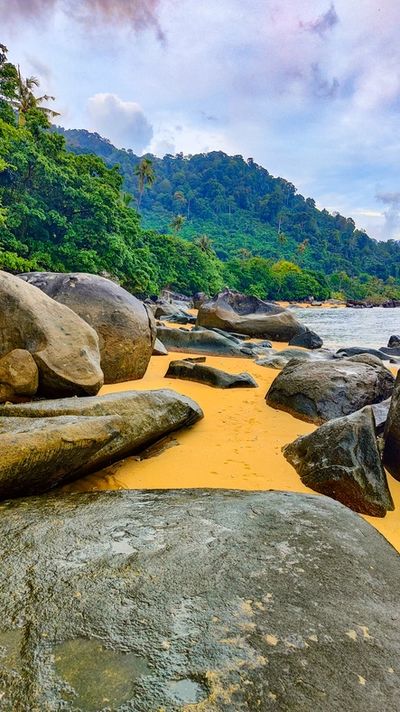
As the sun dipped below the horizon, casting long shadows over the secluded Pointe Indienne beach in the Republic of Congo, Chandru Bhawnani an Indian professional on assignment, prepared to leave with three of his colleagues. The plan was simple- explore the beach before sunset and head back before darkness crept in. Pointe Indienne, while stunning, was no place to linger after dark—its reputation for danger preceded it.
But the sun had not yet disappeared when something unexpected—and terrifying—unfolded.
“We were still soaking in the silence of the beach,” recalls Chandru, “After a good 30 minutes or so to ourselves when we unwinded after a long day, we saw them- the infamous tribesmen of the island. Dozens of armed local tribesmen, running straight toward us. Their eyes were wild, their faces full of rage. It felt like they had come for blood.”
The stillness shattered in an instant.
“I didn’t even register what was happening. My body just reacted. I ran. We all did. Phones, footwear, bags—none of it mattered. We just ran, stumbling across sand, hearts pounding, lungs on fire. It wasn’t just fear. It was the certainty of death chasing us.”
The group managed to duck into a small, abandoned hut a few hundred meters away. They bolted the door from inside and collapsed in silence, every creak of the wood tightening the grip of dread around them.
“In that moment, it felt like the world had stopped,” says Chandru. “None of us spoke. We didn’t even dare look at the time. We truly believed it was the end.”
Then, the unthinkable happened.
After what felt like an eternity, they cracked open a window to check the beach. What they saw left them speechless.
The same group of men who had just been chasing them—swords raised, fury in their stride—were now fleeing in the opposite direction. Terrified. Shouting. Looking back over their shoulders. As if they were being pursued by something—or someone.
But there was no one there.
The beach was empty. The ocean still. The sky darkening, but calm.
“We watched them run like they were escaping death,” Chandru says. “Only, there was no one chasing them. Nothing. Not even an animal. Just the crashing waves.”
In the two years since, Chandru and his companions have replayed that night countless times in their minds.
“None of us saw anything. Not a shadow. Not a sound,” he says. “And yet, whatever they saw—it was real to them. Real enough to turn hunters into the hunted.”
What changed that night? What unseen force turned the tide?
“There’s only one explanation I’ve come to accept,” says Chandru quietly. Divine intervention.
To this day, the mystery remains unsolved. But for five Indians who walked the line between life and death on a forgotten beach in Congo, it was the night the unknown came to their rescue—and reminded them of forces far beyond understanding.
(Chandru and the others belong to the Sindhi Diaspora in Africa, engaged in business and form a chunk of the working community.